(१) News related to events and topics or subjects or issues:
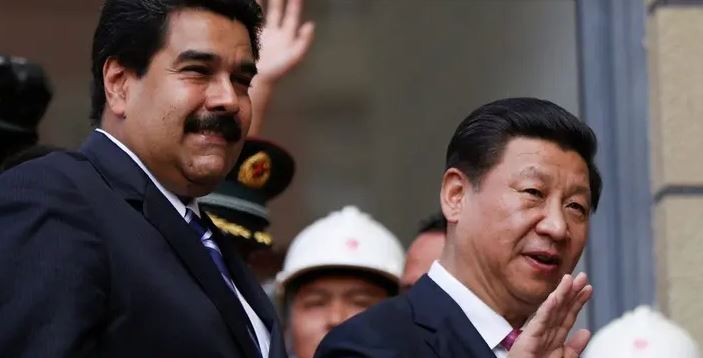
President Donald Trump has declared a “zero tolerance” stance toward narco-states in the Western Hemisphere as tensions rise between the United States, Venezuela, and China. The U.S. deployed the USS Gerald R. Ford aircraft carrier strike group to the Caribbean to monitor alleged narcotrafficking routes tied to Venezuela’s military. The Pentagon stated that the mission’s goal is to disrupt transnational criminal organizations and strengthen U.S. defense readiness in the region. Meanwhile, China has deepened its involvement in Venezuela, unveiling a new zero-tariff trade agreement at the Shanghai Expo 2025, eliminating tariffs on roughly 400 goods traded between the two nations. The deal, announced by Venezuelan officials, is seen as part of Beijing’s growing influence in the Latin American nation. Experts warn that the agreement will increase Venezuela’s economic dependence on China while reducing its industrial capacity, as Venezuela continues to rely heavily on oil exports for revenue.
(२) Causes of events and topics or subjects or issues:
The current standoff stems from a combination of geopolitical, economic, and ideological factors. Venezuela, under President Nicolás Maduro, has faced severe U.S. sanctions for years due to corruption, drug trafficking, and human rights abuses. These sanctions have isolated the country economically, forcing Caracas to turn toward allies like China, Russia, Iran, and Cuba for survival. China’s entry into Venezuela through massive loans—estimated at $60 billion over two decades—has allowed it to secure access to oil, minerals, and even satellite infrastructure. Meanwhile, the U.S. views this as a direct challenge to its influence in the region. Analysts describe Venezuela as a “narco-terrorist regime” that has evolved into a hub for transnational crime and anti-Western activity. The U.S. naval buildup and China’s growing economic involvement reflect a deepening proxy confrontation between Washington and Beijing over control and influence in Latin America.
(३) Lessons to be learned from events and topics or subjects or issues:
This situation underscores the dangers of political corruption, foreign dependence, and regional power struggles. Venezuela’s crisis reveals how authoritarian regimes can turn nations into platforms for organized crime, leading to widespread humanitarian suffering and displacement. It highlights the need for international cooperation, not confrontation, to restore democracy and stability in crisis-hit regions. For global powers, the conflict teaches that economic alliances driven by exploitation and strategic competition can deepen instability rather than solve it. Nations must balance sovereignty with accountability and prioritize their citizens’ welfare over political alliances. Furthermore, the growing U.S.–China rivalry in Latin America serves as a warning that geopolitical competition can have devastating consequences for smaller nations caught in between. The lesson is clear: sustainable peace and prosperity depend on transparency, good governance, and respect for human rights rather than domination or dependency.