

1. News related to events and topics or subjects or issues
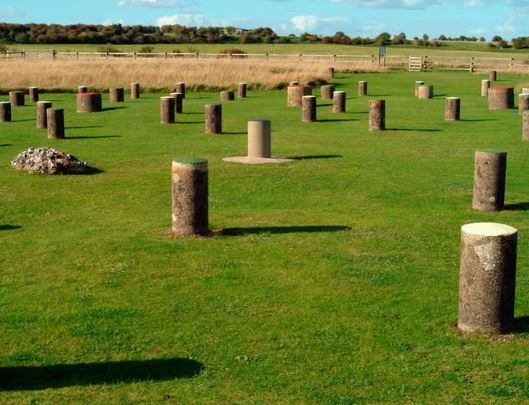
Archaeologists have confirmed the presence of an extraordinary circle of yawning pits near Stonehenge, known as the Durrington pit circle, created by Neolithic people over 4,000 years ago. The circle spans more than a mile and contains around 20 large pits, some 10 metres wide and 5 metres deep, with the Durrington Walls and Woodhenge sites at its center. Its discovery in 2020 was hailed as one of the largest prehistoric structures ever found in Britain and suggested possible evidence of early numerical counting due to its massive scale. Using advanced scientific methods, researchers have now proven that these pits were indeed man-made, dispelling earlier skepticism that they could be natural features.
2. Causes of events and topics or subjects or issues
The pits were deliberately dug by Neolithic people, requiring considerable determination, planning, and engineering skill. Researchers employed a combination of geophysical techniques, including electrical resistance tomography, radar, and magnetometry, alongside soil analysis methods such as optically stimulated luminescence and sediment DNA (sedDNA), to establish both the size and human origin of the pits. Repeating soil patterns across the site indicated human activity rather than natural formation. While the exact purpose of the pits remains unknown, archaeologists speculate that they may have been linked to Neolithic beliefs about the underworld, contrasting with the heavenly focus of Stonehenge itself.
3. Lessons to be learned from events and topics or subjects or issues
The discovery highlights the importance of innovative archaeological methods in uncovering and confirming ancient structures without large-scale excavation. It shows that combining multiple technologies can resolve long-standing debates over human activity and natural formations. The Durrington pit circle also offers valuable insights into the cosmology and ritual practices of Neolithic societies, demonstrating how prehistoric people used monumental landscapes to express beliefs and organize complex communal projects. More broadly, the find underscores how careful scientific investigation can deepen our understanding of human history and the ingenuity of early civilizations.