

(१). News related to events and topics or subjects or issues :-
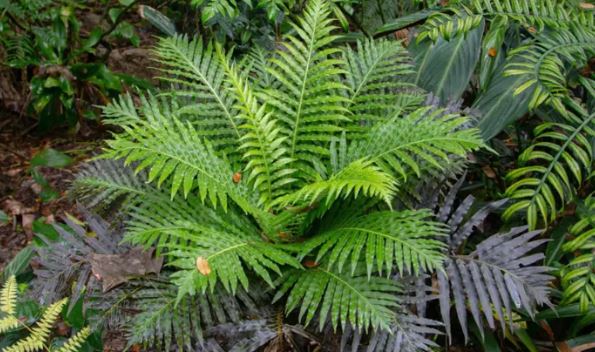
A Chinese-led team of scientists has made a groundbreaking discovery by finding naturally formed nanoscale monazite – a rare earth mineral – inside a living fern (Blechnum orientale). This is the first recorded instance of rare earth elements crystallising into a mineral phase within a hyperaccumulator plant. The study, published in Environmental Science & Technology, shows that these plants can store rare earth metals in concentrations hundreds to thousands of times higher than surrounding soil. The research was carried out by the Guangzhou Institute of Geochemistry in collaboration with Virginia Tech, and it demonstrates the feasibility of phytomining – a plant-based method for extracting valuable rare earth elements.
(२). Causes of events and topics or subjects or issues :-
The discovery became possible due to the unique nature of hyperaccumulator plants, which naturally absorb and store high concentrations of heavy metals or metalloids in their tissues. Rare earth minerals like monazite typically form under extreme heat and pressure, but in this case, the plant’s internal environment facilitated mineralisation under normal Earth-surface conditions. The high concentration of rare earth metal salts and phosphates within plant tissues created a chemical reaction similar to a “chemical garden,” resulting in naturally formed mineral crystals. The rising global demand for rare earth elements for modern technologies also drives scientific efforts to find sustainable, low-impact extraction methods.
(३). Lessons to be learned from events and topics or subjects or issues :-
This discovery teaches that sustainable and environmentally friendly methods can replace traditional mining, which often causes pollution and ecological damage. Phytomining shows the potential for recovering valuable metals while simultaneously rehabilitating polluted soil and restoring ecosystems. The research highlights the importance of investing in scientific innovation to create alternative solutions that reduce geopolitical and environmental risks associated with rare earth extraction. Ultimately, it demonstrates that nature-based approaches can offer a green circular model—where remediation and resource recovery happen at the same time—paving the way for future eco-friendly technological development.