
(1). News related to events and topics:
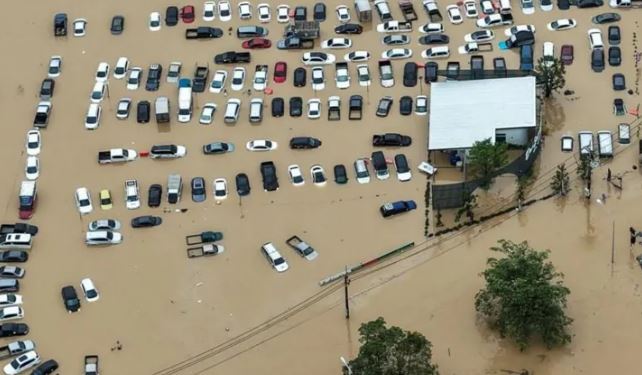
Parts of Thailand are experiencing record-breaking floods, which have killed at least 33 people and prompted the deployment of military ships and helicopters to aid relief efforts. The floods have affected 10 southern provinces, with Hat Yai—a key business hub near the Malaysian border—recording its heaviest rainfall in 300 years, measuring 335mm in a single day. Vehicles and homes have been submerged, forcing residents to seek refuge on rooftops. Over 2 million people in Thailand have been impacted, though only about 13,000 have been moved to shelters. The Thai military is leading rescue operations, deploying an aircraft carrier, 14 boats loaded with relief supplies, and field kitchens capable of serving 3,000 meals per day. Boats, high-clearance trucks, and jet skis are being used to evacuate stranded residents, and medical teams aboard the aircraft carrier are prepared to convert it into a floating hospital if necessary.
(2). Causes of events and topics:
The flooding is the result of relentless heavy rains over the past week, intensified by seasonal monsoon patterns, with Hat Yai receiving unprecedented rainfall levels. Similar extreme weather has affected neighbouring countries, including Vietnam, Malaysia, and Indonesia, resulting in additional fatalities and mass displacement. The geography and low-lying areas of southern Thailand have made communities particularly vulnerable, while densely populated urban centers have exacerbated the humanitarian impact. Infrastructure limitations and the sudden, intense rainfall have left many residents cut off and unable to access timely assistance, creating widespread distress and an urgent need for large-scale rescue operations.
(3). Lessons to be learned from events and topics:
The floods highlight the critical need for disaster preparedness and resilient infrastructure in flood-prone regions. Timely early-warning systems, effective evacuation planning, and robust emergency response capabilities are essential to reduce fatalities and protect affected communities. The crisis also underscores the importance of inter-agency coordination, as military, government, and volunteer groups work together to reach stranded populations. Additionally, public awareness and community-level preparedness can play a vital role in mitigating the impact of extreme weather events, especially as climate change increases the frequency and intensity of such natural disasters in Southeast Asia.